


sales@gblpharma.com


09 Agustus 2025 · Makassar
Global Pharma at Wound Management Seminar Makassar
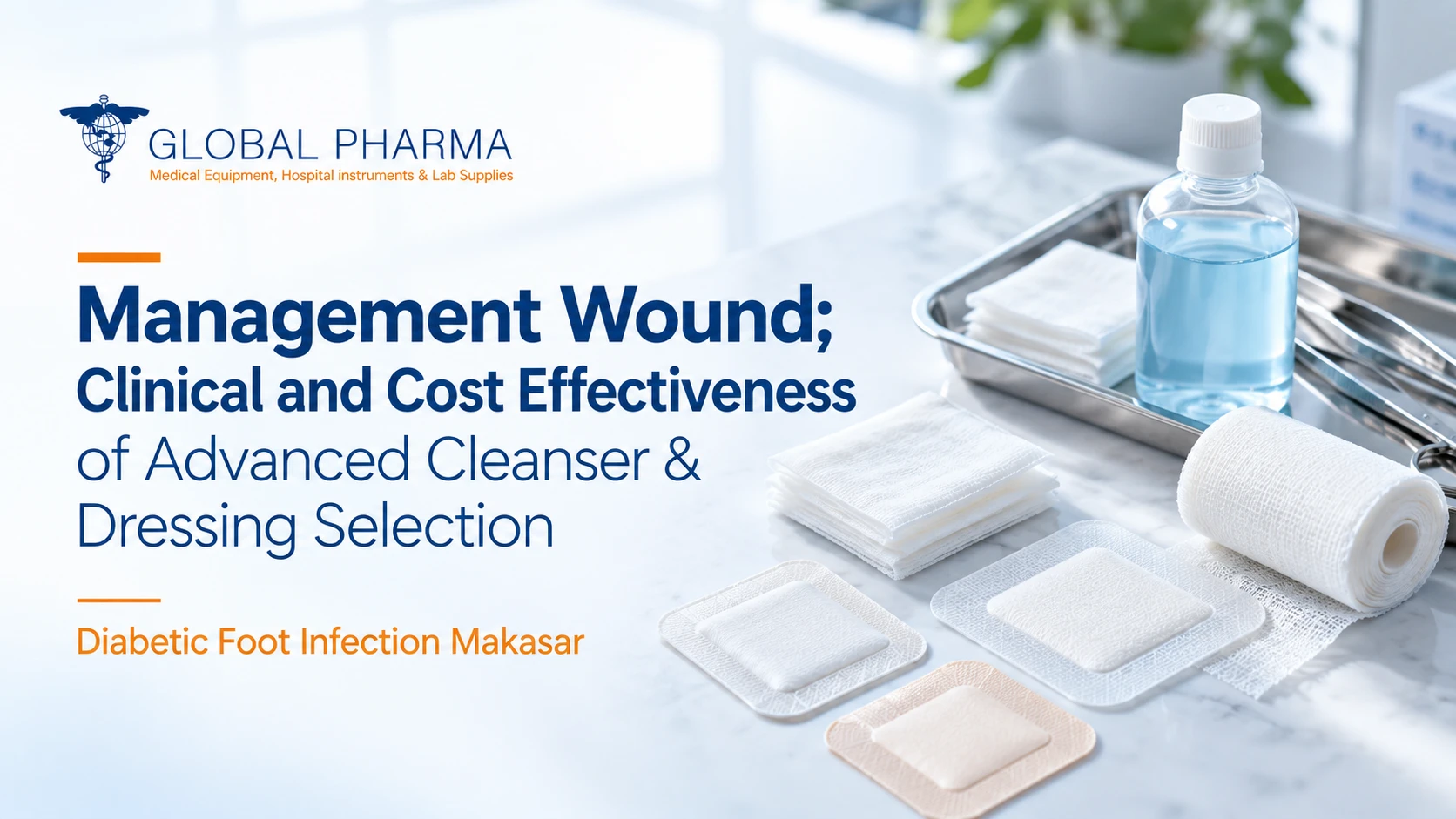
Wound Management: Clinical and Cost Effectiveness of Advanced Cleanser & Dressing Selection — Diabetic Foot Infection
The program addressed a practical challenge in wound-care services: how healthcare professionals can select cleansing and dressing solutions that support appropriate clinical outcomes while also considering resource use.
This topic is particularly important in diabetic foot infection, where delayed treatment or inappropriate management may increase the risk of complications.
Diabetic foot conditions can involve neuropathy, impaired circulation, infection, tissue damage, pressure, and delayed healing.
Management may require input from several professionals, depending on the patient’s condition. Wound assessment, infection evaluation, metabolic control, pressure reduction, vascular review, cleansing, dressing, and patient education may all form part of the care plan.
The seminar encouraged participants to look beyond the visible wound and consider the patient’s overall clinical condition.
Wound cleansing helps remove debris and prepare the wound for further care. Product selection should take into account tissue condition, contamination, infection risk, patient comfort, and clinical protocol.
An advanced cleanser should not be selected simply because it is newer or more complex. Its use should have a clear clinical purpose and be supported by professional assessment.
The seminar provided an opportunity to discuss how cleanser selection can influence wound-care procedures and patient experience.
Different dressing categories may be used to manage moisture, protect tissue, support comfort, or address specific wound characteristics.
A dressing should be chosen based on what the wound needs at that stage of treatment.
Healthcare teams also need to consider how frequently the dressing must be changed, whether it is easy to apply, how it affects the surrounding skin, and whether the patient can continue care safely outside the facility.
Cost effectiveness does not mean selecting the product with the lowest unit price.
A more complete evaluation may include treatment duration, dressing-change frequency, staff time, additional procedures, complication risk, patient travel, and the effect on daily activities.
A product that costs more initially may sometimes reduce other costs. Conversely, a premium product may not be justified when a simpler option meets the clinical need.
The seminar encouraged balanced decision-making based on both patient outcomes and resource use.
Latest Event



GLOBAL PHARMA · HERE TO HELP
Global Pharma Assistant
Website information is general. Please contact our team for medical advice.