
What is a suction catheter?
A suction catheter is a thin, flexible tube that attaches to a breathing or tracheostomy tube. The opposite end connects to a suction machine and a collection container. It works like a straw, pulling out mucus, blood, or fluid from the airway. This action opens the airway and helps the patient breathe easier. Each catheter is sterile and for single use only. After suctioning, the nurse discards it to prevent infection. Many suction catheters have centimeter markings along their length to guide the depth of insertion.
Benefits of suction catheters

Suctioning is not routine for healthy individuals; it is needed only when someone has difficulty clearing their airway. Suction catheters help patients who cannot clear mucus independently. They reduce the work of breathing and keep the lungs clear of obstructions. By removing secretions, they prevent mucus plugs that could lead to lung collapse, atelectasis, or pneumonia. Clearing the airway allows more oxygen to reach the lung tissue. In clinical settings, nurses commonly use suction catheters for patients on ventilators or with respiratory tract infections. Research shows that suctioning decreases the work of breathing, promotes pulmonary hygiene, and helps prevent complications. This highlights its importance for patients. Overall, suctioning supports breathing and maintains healthy lung hygiene.
Types of suction catheters
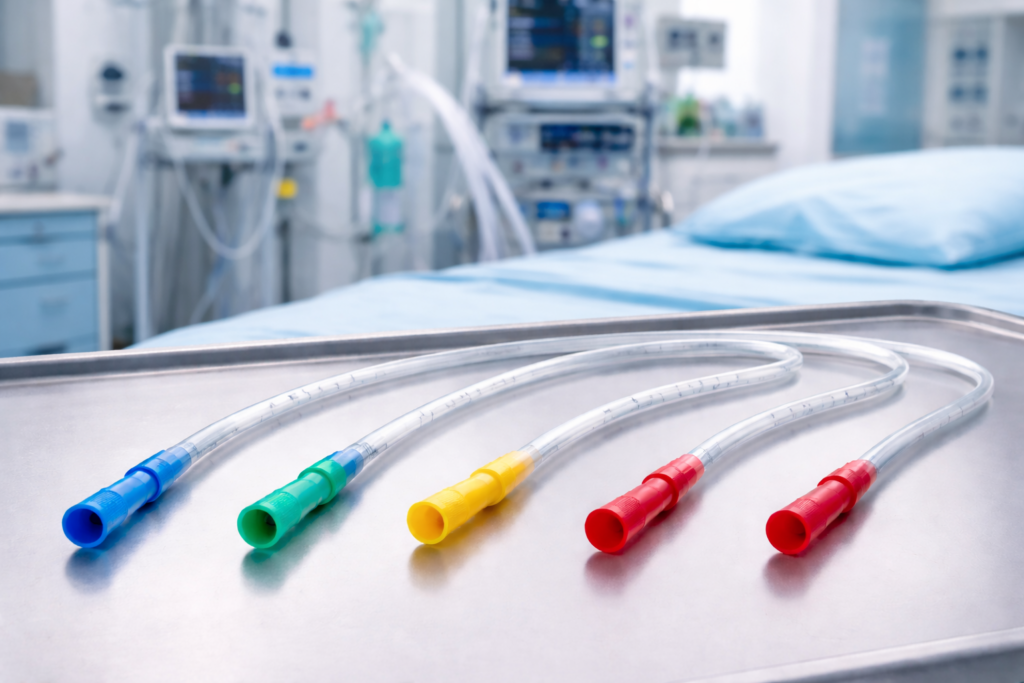
Suction catheters come in various types and sizes, typically measured in French gauge (Fr). The manufacturer color-codes the connector to indicate the size.
- Blue: For small infants or neonates (6-8 French).
- Green: For pediatric patients (8-10 French).
- Yellow: For adults (10-12 French).
- Red: For larger adult patients (14-16 French).
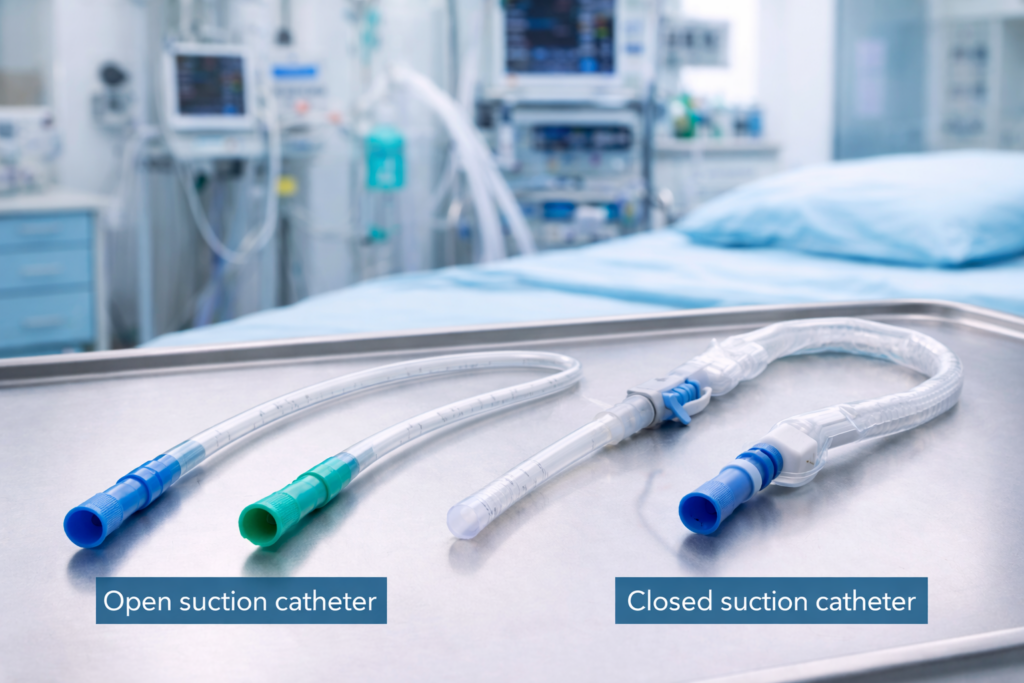
Different types of suction catheters serve specific purposes. The most common types include:
- Open suction catheter: Commonly used in hospital settings, this catheter is inserted into the airway and suctioned intermittently to remove fluids. It is typically used for patients who need frequent airway clearance.
- Closed suction catheter: This type is used in critical care settings, especially for ventilator patients. The closed system minimizes infection risk by preventing contaminants from entering the airway during suction.
Control styles of suction catheters

Suction catheters come in different control styles, each providing a specific method for controlling suction:
- Standard suction catheter: The most common type, which provides continuous suction without a control valve.
- Finger tip control catheter: Features a small vent controlled by the finger, allowing quick suction release.
- Thumb control catheter: Has a thumb-operated valve for better control over suction strength.
- Atraumatic tip catheter: Designed with a round, soft tip and side holes, minimizing irritation and injury to tissue.
When to use a suction catheter
Use a suction catheter when secretions block the airway and affect breathing. In practice, ICU staff may perform suctioning every few hours as part of routine care. They also suction patients who show noisy breathing or distress. Suction catheters are essential for patients on ventilators or with tracheostomies. Nurses or respiratory therapists use them for patients who cannot cough out mucus due to unconsciousness, heavy sedation, or weakness. In long-term care or home care, individuals with conditions like ALS or spinal cord injuries use suction catheters to clear mucus. Families usually receive guidance on safe use from healthcare professionals.
Choosing the right suction catheter

Choosing the right suction catheter involves selecting the appropriate size and style for the patient’s needs. The diameter of the airway is the limiting factor. Adult catheters usually range from 14 to 16 Fr, while smaller sizes, such as 5 to 8 Fr, are used for infants and small children. A good rule is to choose a catheter that does not exceed half the width of the breathing tube. Always check the color-coded connector to verify the size. Many manufacturers use soft, DEHP-free PVC to minimize hazardous chemicals and reduce catheter kinking. There are also closed or open suction systems. Closed inline systems allow the removal of secretions without disconnecting the catheter from the ventilator, maintaining continuous ventilation and minimizing infection risks. For home care, portable suction pumps (pneumatic or battery-operated) are available for these catheters. Regardless, always maintain proper hygiene by using gloves and clean equipment. If unsure, consult a healthcare professional.