While both are important protective clothes in healthcare, surgical gowns and isolation gowns are not interchangeable. Each garment type is for specific environments, levels of risk, and kinds of procedures. How they differ assists medical staff in selecting appropriate gowns for the protection of both patients and workers.
Purpose and Intended Use
Surgical gowns and isolation gowns look a lot alike, yet they clearly have very different roles in healthcare. Surgical gowns are worn by surgeons and clinical staff within operating rooms. They serve as a sterile barrier around the patient’s surgical site. This is to protect the patient from any bacteria that may enter the incision. They also protect the medical team from blood or other bodily fluids that might splash during such a procedure. The environment during surgery really needs to be highly controlled and sterile. One mistake could lead to infection. That is why surgical gowns are handled with special steps during donning and doffing.
Isolation gowns should be worn in non sterile environments. They may be worn when a health care worker will enter a patient room where an infection control concern exists. Such gowns might be worn by staff while providing care for patients with contagious illnesses like COVID-19, influenza, and C. diff. These protect the wearer’s clothes and skin from splashes or direct contact with infectious materials. They block germs from traveling to other rooms on the worker’s clothes. Isolation gowns help to provide daily infection control in the hospitals, clinics, nursing homes, and laboratories.
Materials and Fabric
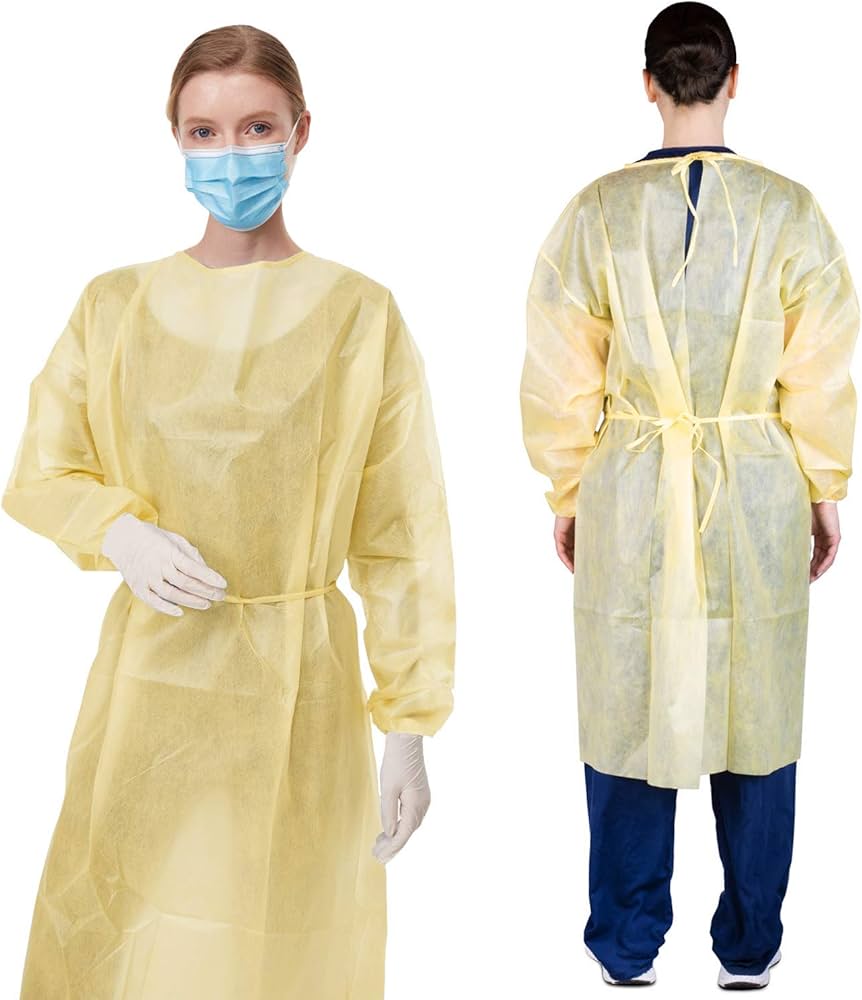
There are materials common to both surgical and isolation gowns that help block fluids and germs, but the performance of each gown type is different. Lightweight non-woven polypropylene is a very common material in isolation gowns. It feels soft but rather papery. The fabric is somewhat airy, which can keep a person cool on long shifts. Many of these gowns are single-use. After one visit in a patient’s room, the gown goes into the trash. Some reusable versions do exist, however. These are made from washable materials that remain protective through many laundry cycles. Isolation gowns may also include a light plastic coating for added splash resistance.
Surgical gowns are constructed to endure more demanding circumstances. They generally make use of a more robust multilayer fabric, referred to as SMS, standing for spunbond-meltblown-spunbond. This fabric shows good resistance to tearing and fluid exposure. As such, it provides a powerful barrier for blood and other fluids that may spray during an operation. Reinforced sections, especially around the chest and arms, can be added to some surgical gowns. These prevent smaller particles, including viruses, from breaking through. Surgical gowns are available as both disposable and reusable options. Reusable gowns are sterilized after each procedure to maintain their cleanliness and safety.
Level of protection
Medical gowns are rated on their resistance to fluids and microorganisms. These range from Level 1 to Level 4. Higher levels are stronger levels of protection. Isolation gowns are normally manufactured for either low-level or medium-level exposure. A Level 1 isolation gown is for those instances of minimal fluid exposure, such as non-invasive treatment activities. Level 2 gowns provide protection against small splashes of liquids in a standard isolation environment. Level 3 isolation gowns are useful in settings where fluids are moderately exposed, such as during specific emergency room procedures. Most of the isolation gowns fall under one of these three levels. They help in preventing the spread of germs during normal patient care.
Surgical gowns require strong performance. Operating rooms involves close contact with blood, surgical irrigation, and other fluids of the body. A surgical gown may meet Level 3 or Level 4 protection, depending on the type of surgery. Level 4 rating is the highest. It includes resistance to viral penetration. These gowns pass a very strict testing in the laboratory before they are approved for surgical use. They keep patients and staff safe in environments where contamination risks are high. A surgical gown does not only block all types of fluids, but it also supports a sterile zone around the surgical site. It reduces chances of infection when this barrier is maintained.
Design and Coverage
Design considerations for surgical gowns versus isolation gowns reflect their intended uses. Isolation gowns tend to be designed with a simpler layout to provide coverage for the chest, torso, and arms. They would tie at the neck and waist and often have an open back for comfort and ventilation. Their loose-fitting design allows workers ease of movement for routine activities in patient care, such as lifting or adjusting patients, or disinfecting medical equipment. The sleeves are full-length, providing coverage to the wrists, which has elastic or knit cuffs to prevent wrists from being exposed. Because splashes can occur in all directions, nearly the entire gown front must meet the required protection level. Isolation gowns are readily donned or doffed by healthcare workers at a moment’s notice during their work.
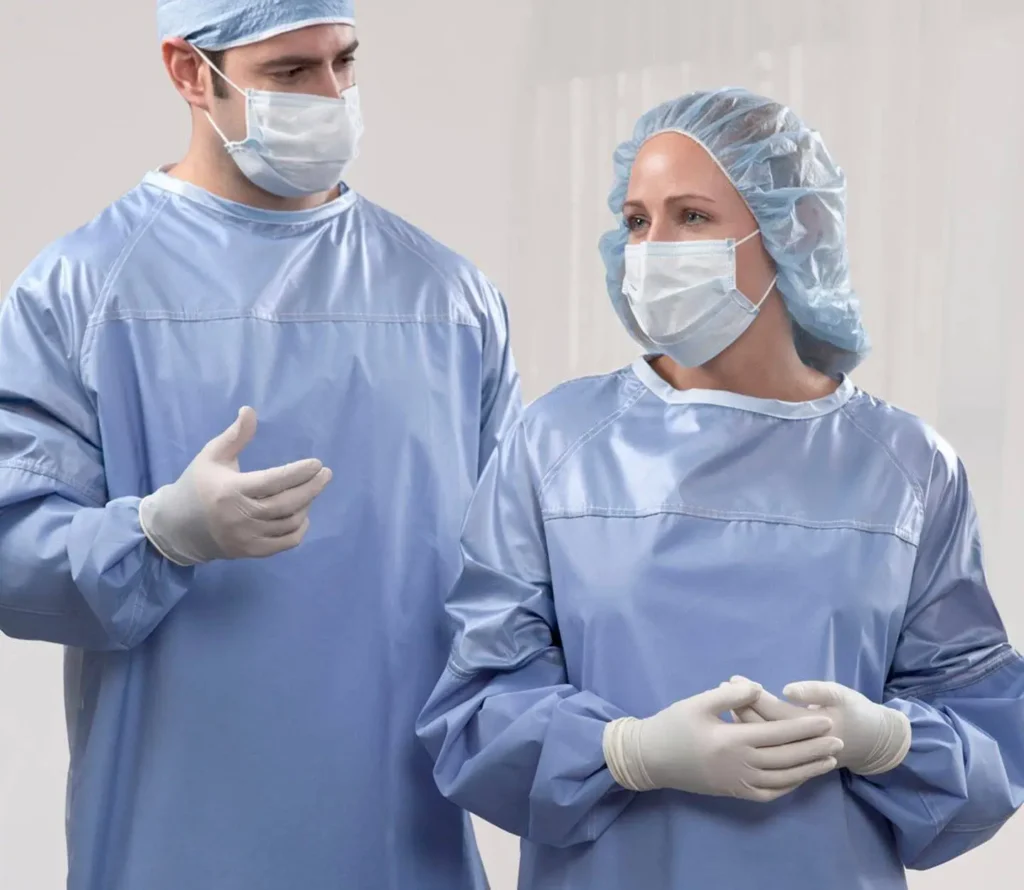
Surgical gowns are designed to target the most ‘at-risk’ areas. They cover the front of the body, from the neck to the knees, and have long sleeves with fitted cuffs. These are the most highly-exposed areas to fluids during surgery. The back of a surgical gown is usually less protective; it might be partially open to permit body heat to escape. This allows surgeons to remain comfortable when they are operating under bright lights. Surgical gowns are cut to be more fitted, in order to avoid excess fabric interfering with surgical instruments. Heavy reinforcement can often be found on the chest and forearms to block strong fluid spray.
Comfort and Fit
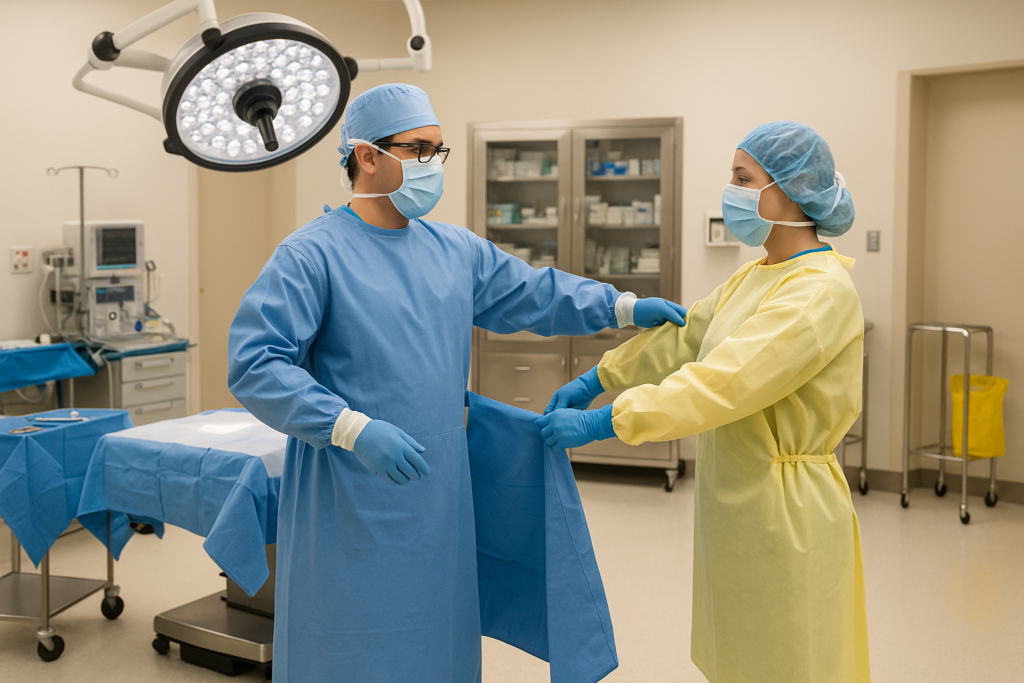
Comfort is an issue when health professionals are required to wear protective garments for extended periods. Isolation gowns are extremely comfortable to wear because of their light weight and loose fit. The breathable textile allows for the release of body heat. Workers can feel cooler while moving in and out of patient rooms. Lifting, bending, and reaching is easier with this loose-fitting cut. Removal of an isolation gown is effortless. Several have tear-away seams that minimize contact with contaminated surfaces. These features support daily use in a wide range of healthcare settings.
Surgical gowns are for higher protection, and that surely affects comfort. The material is heavier, and the fit is more secure. Surgeons and nurses who perform longer procedures are likely to feel warmer under the gown. To improve comfort, surgical gown designers leave the back less protected so heat can escape.. Modern disposable fabrics balance strong protection with some breathability. The tighter fit prevents the gown from brushing against sterile instruments or surfaces. Cuffs stay tightly sealed under gloves, keeping wrists protected throughout the procedure.
The surgical staff requires the help of trained assistants when putting on and then taking off the gown to avoid loss of sterility. When it is secured, the gown remains in place as the wearer moves his arms during surgery. Both types of gowns try to balance comfort with safety demands. Isolation gowns try to focus on flexibility and cool feeling. Surgical gowns go for stronger protection while enabling steady movement during complex tasks.
Where Each Is Used
Surgical gowns are primarily used in operating rooms and specialized sterile areas. During surgery, when the incision is open, the clinical team must protect that area from contaminants. Surgeons, scrub nurses, and operating technicians wear sterile surgical gowns along with gloves, masks, and other gear. Invasive procedures, both minor and major, require such gowns. These gowns are also used in areas that deal with sterile techniques, such as a cardiac catheterization lab or during a C-section in a delivery room. In these environments, strict sterility prevents infections, which could delay the healing process or cause serious health issues.
Isolation gowns are very common in many other parts of a hospital or clinic. Indeed, in a case where a patient has been subjected to isolation precautions, anyone entering the room must wear a gown to prevent infectious germs from spreading. This includes doctors, nurses, family members, and cleaning staff. These gowns may also be distributed in intensive care, emergency departments, or laboratory areas. Whenever there is a probability of exposure to bodily fluids, an isolation gown may be worn. Healthcare staff may wear an isolation gown when drawing blood, handling lab samples, or cleaning spills.
Visible Differences
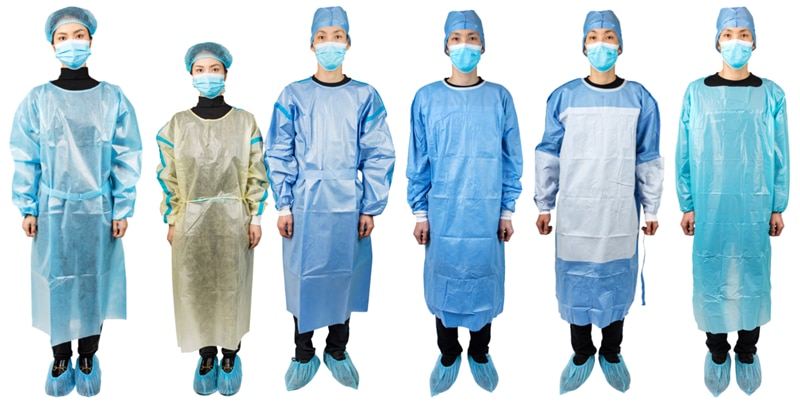
Surgical and isolation gowns may look very similar at first glance, but certain details can help determine for which purpose they are being used. Color is one of the most apparent features. Most surgical gowns are blue or green because operating room staff could focus better visually in bright lighting conditions. In fact, these colors reduce glare and eye fatigue. Isolation gowns are yellow or a bright color in order to call attention to infection control precaution. This helps staff know to take extra care before entering a room.
Material thickness varies as well. Surgical gowns appear thicker and are more substantial in feel. Many have reinforcement visible on the sleeves or chest area. Such reinforcement acts to further protect those areas that may come into contact with bodily fluids during a procedure. Isolation gowns seem much thinner. The material may even be somewhat diaphanous, or semi-see-through. The cut of an isolation gown is typically loose, with adjustable ties for various sizes. Many versions are available in a single size, said to fit most. Surgical gowns have several sizes, to provide a closer and more fitted outline on the wearer.
Packaging provides another cue. Surgical gowns are always supplied in sterile wrap and opened in a controlled environment. Isolation gowns arrive in bulk packs or wall dispensers near patient rooms for rapid access. The fit, thickness, and color present ways for the healthcare worker to instantly identify what type of gown is in use. These visible differences parallel each gown’s function in clinical use.