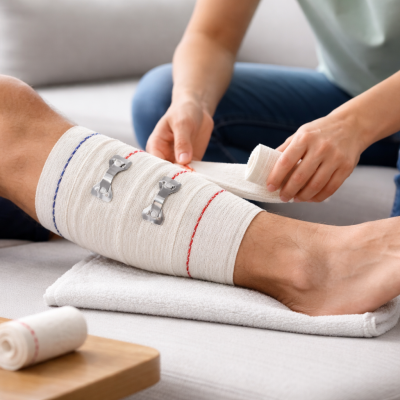
Crepe Bandages
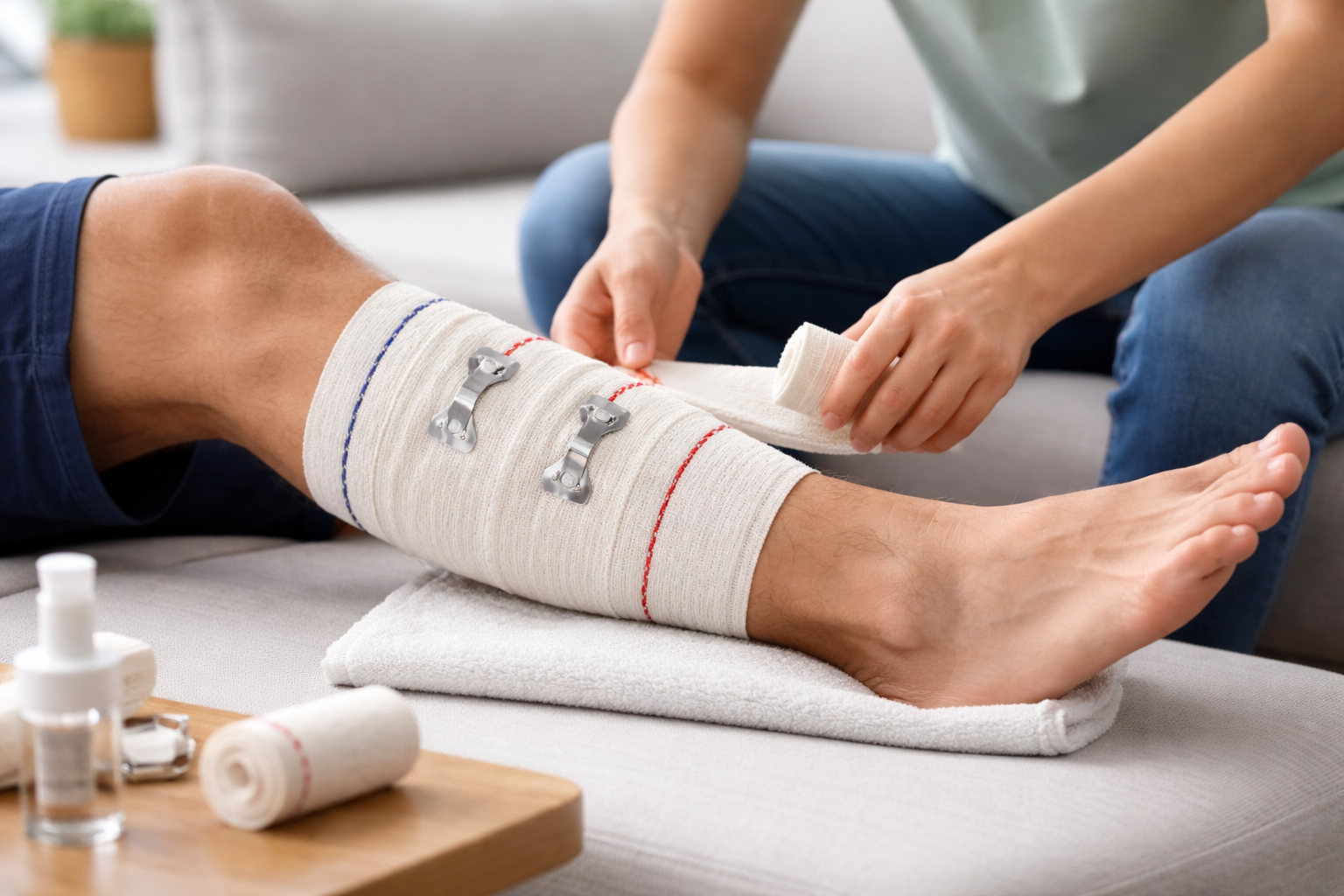
Crepe bandages are woven cotton materials that are stretchy and are used to cover limbs and joints. They give support and compression to injuries without limiting the movement of the limbs. The crinkled cotton weave is breathable and washable, so it can be cleaned and reused. They are normally used to keep pads firmly pressed on wounds due to their ability to cling firmly.
Benefits and Uses

- Supports sprains and strains
Crepe bandages wrap around ankles, knees, wrists, and elbows to give gentle support during rehab or sports. This helps prevent or stabilize strains and sprains.
- Reduces swelling
By squeezing an injured area, the bandage eases fluid buildup in soft tissues. Its elastic compression gently pushes fluid away from joints, which can reduce swelling and pain.
- Holds dressings in place
Crepe bandages are ideal for wrapping over gauze or pads on a wound. They protect the dressing and keep it firmly in place even during movement.
- Keeps heat on injuries
The snug, elastic wrap helps retain warmth in the injured area. This heat retention can speed healing by improving blood flow to the tissues.
- Supports joints
Wrapping a crepe bandage around a sore joint gives stability. The soft tension can ease joint pain and prevent further injury during activity.
- Post-surgery care
After surgery, light compression from a crepe bandage can minimize swelling and provide steady support. It keeps the surgical site warm and stable, which promotes faster healing.
These bandages are widely used in first-aid kits for sports injuries, home accidents, and work injuries. They provide reusable support and do not stick to skin, making them handy for many situations.
How to Use a Crepe Bandage
1. Choose the right size : Pick a bandage width that fits the area. For example, use 5cm for a child’s limb, 7.5cm for adult wrists or ankles, 10cm for knees or shoulders, and 15cm for thigh or chest injuries. Using the proper width helps wrap efficiently without cutting off movement.
2. Start wrapping below the injury: Begin at the point farthest from the heart (usually below the injury) to encourage blood flow upward. For example, if wrapping an ankle, start around the calf.
3. Keep the bandage flat and smooth: Lay each turn of the bandage flat against the skin. Overlap each layer about one-third of its width. This ensures even support and prevents lumps or wrinkles that could rub the skin.
4. Apply firm (but not tight) tension: Pull the bandage fairly snugly as you wrap to provide compression, but not so tight that it cuts off circulation. You should be able to fit a finger under the bandage. If fingers or toes below the wrap become cold, pale, or tingly, re-wrap more loosely.
5. Secure the end: Once you’ve covered the area, fasten the end with clips or medical tape. Make sure the bandage won’t unwind, but also double-check it is not too tight.
6. Check circulation: After applying, press on a fingernail or toe below the bandaged area until it blanches, then release. If the color returns within 2 seconds, circulation is fine. Repeat the check regularly while wearing the bandage.
When Not to Use a Crepe Bandage
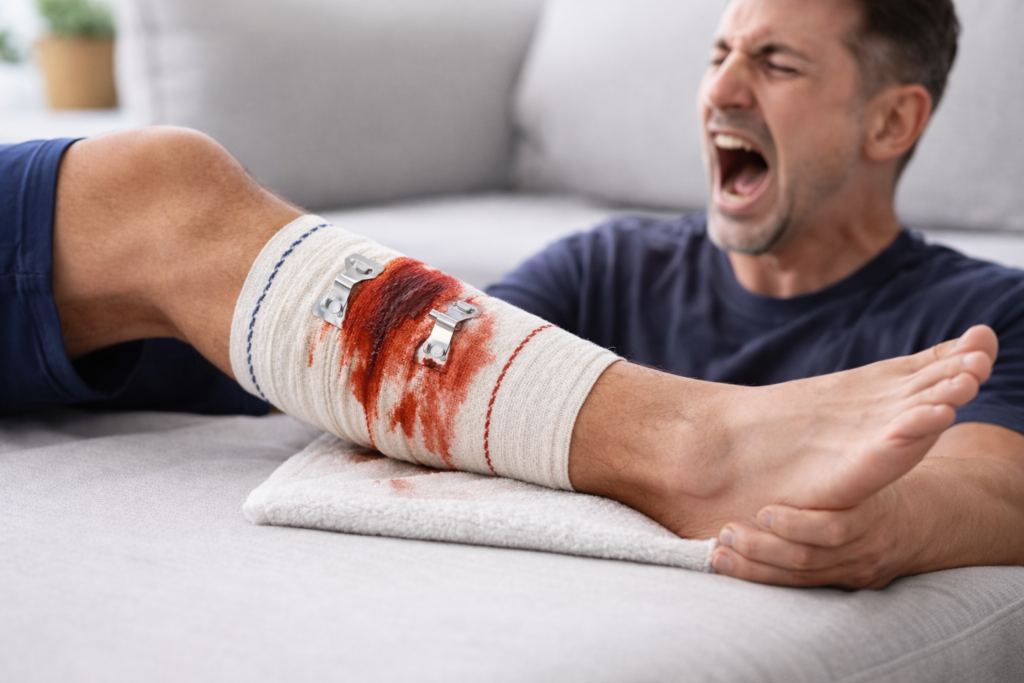
Crepe bandages are versatile, but avoid using them in these cases:
- Sleeping
The pressure needed during activity can be too much when lying down. Since blood flow slows at night, an overnight crepe wrap may restrict circulation.
- Signs of poor circulation
If the limb below the bandage turns pale or blue, or you feel “pins and needles”, remove the bandage immediately. These signs mean blood flow is cut off.
- Venous disease
People with chronic vein problems (like venous insufficiency) should not use standard crepe bandages for compression. These bandages don’t help venous return and could worsen the condition.
- Worsening injury
If swelling or pain gets worse while using the bandage, loosen it and seek medical advice. A properly applied bandage should help a sprain or strain, not aggravate it.
- Open or heavily bleeding wounds
Crepe bandages are not meant to be the first layer on an open or infected wound. Always use a sterile dressing on deep cuts or infections first.
Crepe vs. Elastic Bandages
Crepe bandages differ from elastic (cohesive or tubular) bandages in several ways. The table below compares them:
| Feature | Crepe Bandages | Elastic Bandages |
| Compression level | Medium to light support | High, firm compression |
| Material | Woven cotton (crinkled texture) | Stretchy elastic blends (often polyester) |
| Ideal for | Sprains, strains, and holding dressings | Moderate-to-severe injuries and rehab support |
| Securing method | Fastened with clips or pins | Usually self-adhesive (sticks to itself) |
Crepe bandages give gentler compression and need pins or clips to hold them. Elastic bandages can grip themselves and apply stronger compression for cases like serious ankle or knee support.
FAQs
Is it safe to wear a crepe bandage overnight?
In general, no. It is best to remove the crepe bandage before going to bed so that the circulation of your blood is not restricted. This keeps blood flowing freely when your activity level drops.
Can I use a crepe bandage on an open wound?
Not directly. You should cover an open wound with a sterile pad or dressing first. Then you can wrap a crepe bandage over the dressing to hold it in place. Never apply a crepe bandage directly on broken skin or deep cuts.
How often does a crepe bandage need to be washed or changed?
Crepe bandages are washable and reusable. Wash them after each use or whenever they become dirty. Check your crepe bandages regularly and change them if they are stretched out or frayed. In general, change or wash your bandage whenever you change dressings or notice it’s soiled