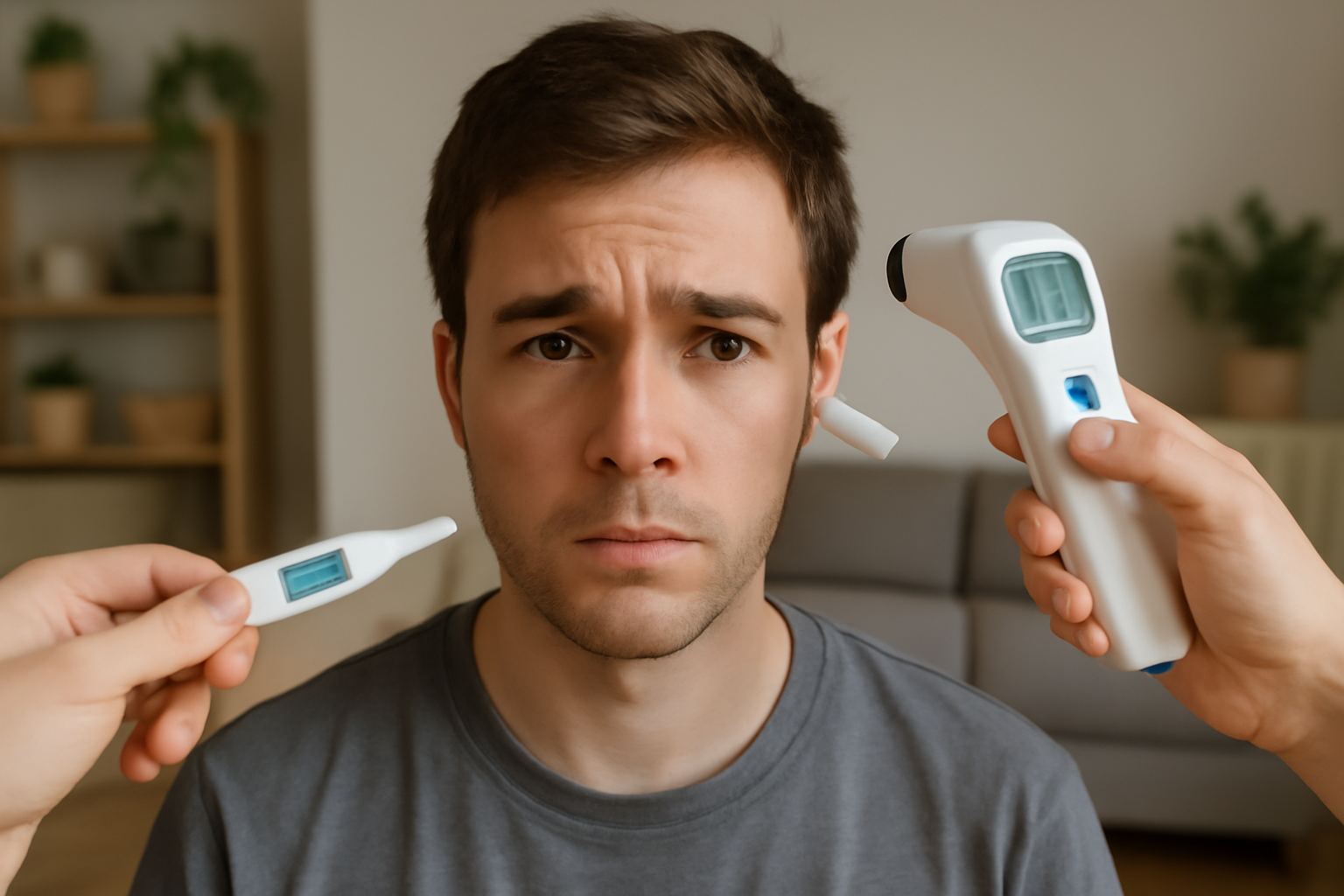
When it comes to measuring body temperature, the right thermometer can make all the difference in accuracy, convenience, and comfort. With several options available like forehead, ear, and oral thermometers, each has a different set of advantages and possible disadvantages. Whether crowd screening, checking up on a sleeping child, or taking your temperature, it is always important to understand how each type works and which one would be best for you. In this guide, we compare forehead, ear, and oral thermometers to help you in decision-making for your next check of temperature.
Forehead Thermometers
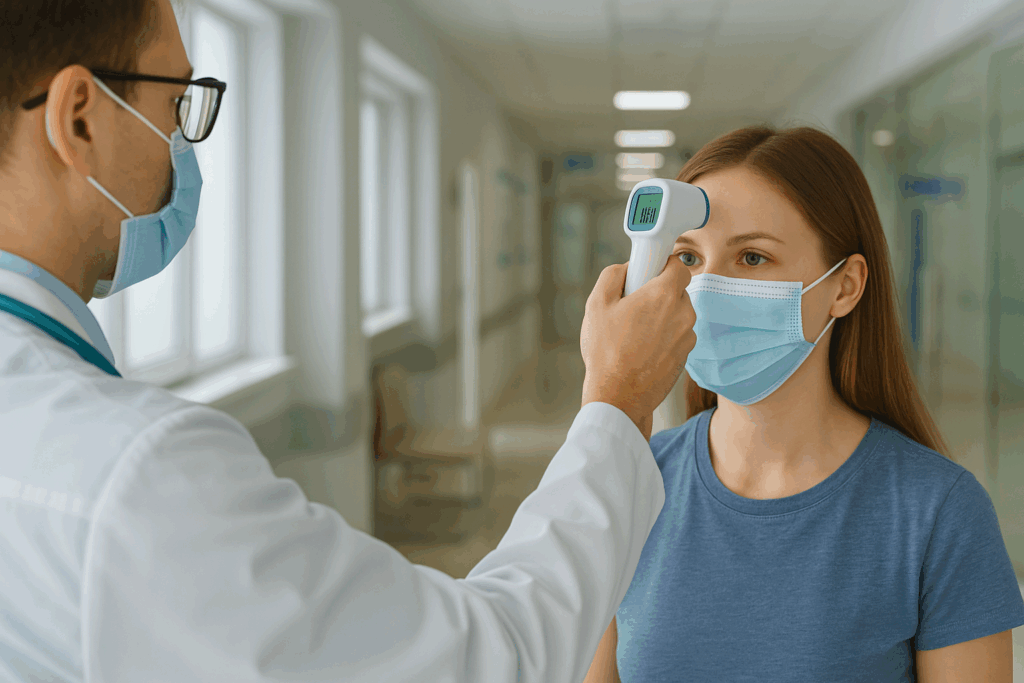
Forehead (temporal) thermometers use an infrared scanner to measure the skin over the forehead. They give a reading in seconds without touching the person, making them handy for quick screenings and checking sleeping children. However, their accuracy may suffer. Research demonstrates that forehead readings tend to be lower compared with oral or ear measurements. The result can be skewed by sweat, being in a warm room, or in direct sunlight. Experts note that keeping the device too far, or on a sweaty forehead, will throw off the number. To apply it in practice, keep the forehead clean and dry, and follow the instructions for distance of the device, normally 1–2 cm, for the best result.
Key points about forehead thermometers:
Very fast: Results appear in a few seconds, useful for checking many people.
Noninvasive: No probe inside the body; thus, it is hygienic and child-friendly.
Note: Results are unreliable if the head is perspiring, cold, or in direct strong sunlight. Always follow guidelines by the manufacturer for placement and distance.
Ear Thermometers

Ear (tympanic) thermometers use an infrared sensor in a probe that is placed gently in the ear canal. They detect the heat emitted by the eardrum and display a digital temperature reading in seconds. If placed correctly, they record core body temperature accurately. An ear thermometer is appropriate for children older than about 6 months and for adults. As a matter of fact, ear readings are often more accurate than forehead scans, particularly in older infants and toddlers. However, proper use is critical. Any earwax, fluid, or even a slight movement can result in a false low or high reading. Never aim the probe at a child who has just lain on that ear, and ensure the ear is free from dirt. If there is an infection in an ear or excessive wax, this may interfere with the function of an ear thermometer. Besides, infants less than about 6 months have ear canals too narrow for these devices.
Tip: Always pull the ear back and up (for a toddler) or back (for an older child) before inserting the probe to help it reach the eardrum.
Oral (Mouth) Thermometers

Digital mouth thermometers are the classic stick-style devices placed under the tongue. They measure temperature via contact and usually take 30–60 seconds to register a reading. When used properly, oral thermometers give very accurate results. In older children and adults who can sit still, oral readings are “usually accurate” provided the mouth stays closed. Patients must wait a short time after hot or cold drinks, and they should keep the thermometer under their tongue until it beeps.
With very young children, or with anyone who can’t keep their mouth closed, oral thermometers can be awkward because they require contact and cooperation. For anyone who can retain the probe correctly, though, oral devices are an excellent option if good precision is required. They often give the true body temperature if nothing interferes. Just remember to clean the probe after every use to maintain hygiene.
Which Thermometer Works Best?
Different tools fit different situations. Consider the following guidelines:
-
Screening large numbers of people
These forehead, non-contact thermometers shine for quick checks. You can scan a crowd from a bit of distance, which helps maintain hygiene and social distancing. They are ideal for offices or schools doing rapid screening.
-
Sleeping or fussiest children
A forehead thermometer doesn’t disturb them. You can take a reading without rousing or upsetting a sleeping child. Thus, they are convenient for babies or toddlers at bedtime.
-
Infants and babies
The gold standard for infants is rectal – most accurate for babies under 3 months. Of ear, forehead, and mouth, forehead is usually easiest for a napping baby. Ear thermometers are not reliable on very young infants – their ear canals are too small.
-
Toddlers (6–36 months)
If a toddler will hold still, an ear thermometer can give a precise result very quickly. If the child resists, a forehead check is simpler, though slightly less accurate. You may choose based on cooperation: for a squirming toddler, forehead is often kinder; for a calm toddler, ear is fine.
-
Older children and adults
Digital oral thermometers provide good results here. They yield reasonably accurate readings for those who can hold the device steadily in the mouth. Ear thermometers work pretty well in this group, too-just be on the lookout for earwax issues. Forehead scanners continue to be a quick non-contact option if preferred, with the usual compromise of a possible small margin of error.
-
Consistency is key
Once you pick a method for your situation, stick with it. The use of the same type each and every time helps you make comparisons of the readings easily over time. For instance, if ear thermometers were used to check the staff’s temperatures, continue using them. Mixing methods can make it hard to tell if temperature changed. In other words, there is no one “best” thermometer for everyone. Each has its place: forehead thermometers for speed and hygiene, ear thermometers for quick core temperature readings in cooperative subjects, and oral thermometers for precision in patients who can cooperate. The choice depends on the person and the situation, and remember to follow the guidelines, such as keeping the device clean and using it at the right spot, for the most accurate results.