What is an Alcohol Swab?
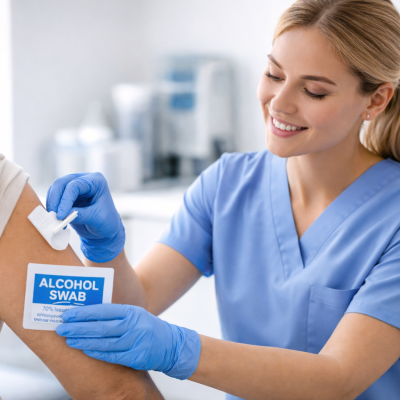
An alcohol swab is a small, sterile, and cotton or non-woven fabric pad. Manufacturers of these pads soak them in a certain alcohol concentration. In most cases, they are soaked in 70% isopropyl alcohol. You will find them packaged in a foil packet, usually individually wrapped.
These small pads are very important in a medical setting or a first-aid kit. They are a fast-acting antiseptic and help to slow down the growth of germs on the skin. Another thing is that they are disposable, which means they do not cause cross-contamination.
What is an Alcohol Swab Used For?
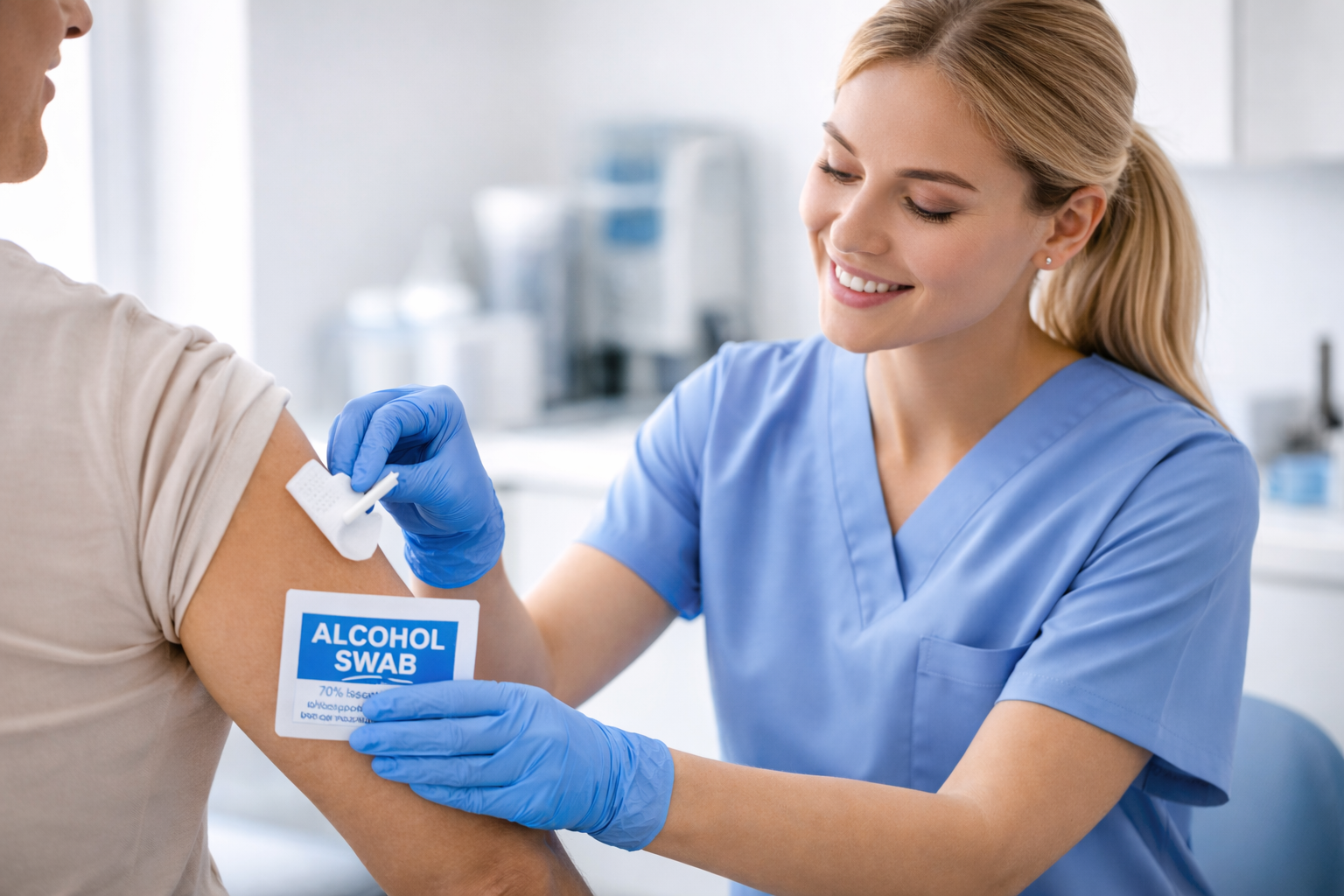
The main purpose of an alcohol swab is skin preparation before an injection. Nurses apply these swabs to the skin area before the needle touches it. This is an effective way to prevent bacteria from entering the bloodstream. It prevents infections from syringes, lancets, or IV starts.
Apart from injections, people apply these swabs for first aid. You can apply one to the skin area around a scrape. They help remove dirt and oils from the skin surface. People also apply them to sanitize small medical instruments such as tweezers or thermometers.
In a home environment, they are useful for cleaning “high-touch” areas. You can clean your phone screen or computer mouse with them. They are also useful for removing ink stains or cleaning jewelry. However, their original purpose is to keep the skin safe during a medical procedure.
Types of Alcohol Swabs
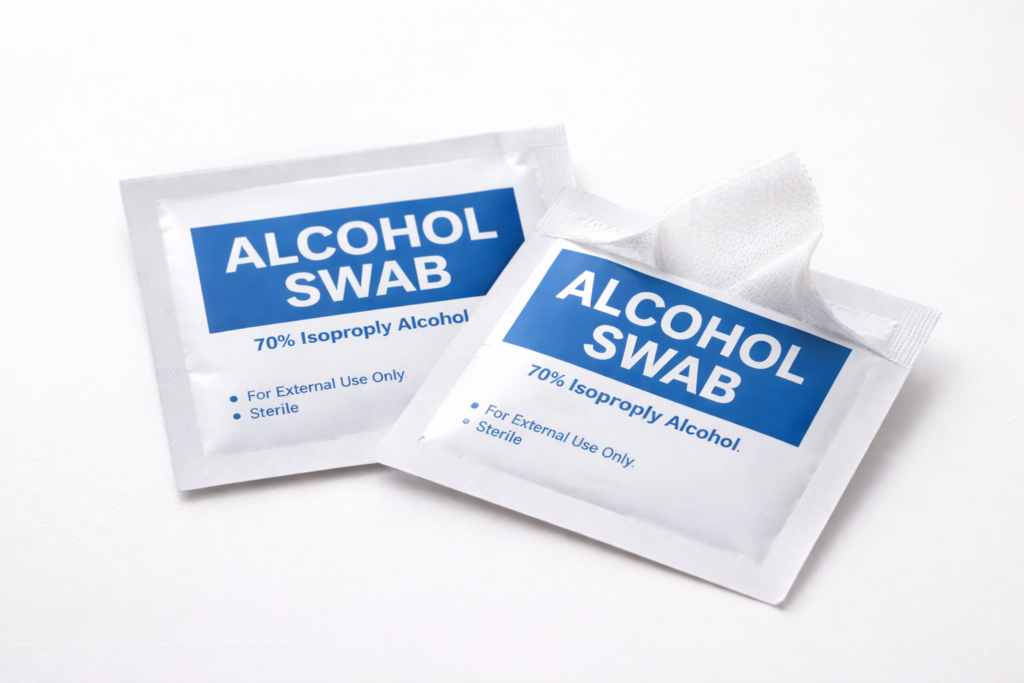
Not all alcohol swabs are the same. Different uses require different levels of chemicals. These are the two most popular types you will come across:
70% Isopropyl Alcohol Swab
This is the most common swab available in most pharmacies. It has 70% isopropyl alcohol and 30% water. This particular combination is extremely effective at getting inside bacterial cell walls. It is great for general skin prep and prepping for simple shots. It is inexpensive and very easy to get your hands on.
70% Isopropyl Alcohol and 2% Chlorhexidine Swab
These are commonly used by medical professionals for more invasive procedures. The addition of 2% chlorhexidine creates a longer-lasting solution. Alcohol kills germs quickly, but it evaporates quickly too. Chlorhexidine remains on the skin to continue killing germs for several hours. These are commonly used by doctors for central line placements or blood draws.
When Not to Use an Alcohol Swab
Alcohol swabs are very useful, but they are not to be used in all circumstances. It is recommended that you do not use alcohol swabs on sensitive areas of your skin. This can be around your eyes or in your nose. This is because the alcohol will cause extreme stinging and drying in these areas.
It is also recommended that you do not use an alcohol swab on a deep or open wound. This is because the use of alcohol on torn skin can actually slow down the healing process. This is because the alcohol can damage the healthy cells that are trying to heal the injury. You should also not use alcohol swabs on irritated skin or skin that has been sunburned.
You should not use alcohol swabs to clean eating utensils or food. This is because the chemicals in the swabs are not safe for consumption. You should also not use an alcohol swab near an open flame. This is because the alcohol is highly flammable and can catch fire easily. Finally, you should not use an alcohol swab as a compress to reduce a fever.
Common Questions About Alcohol Swabs
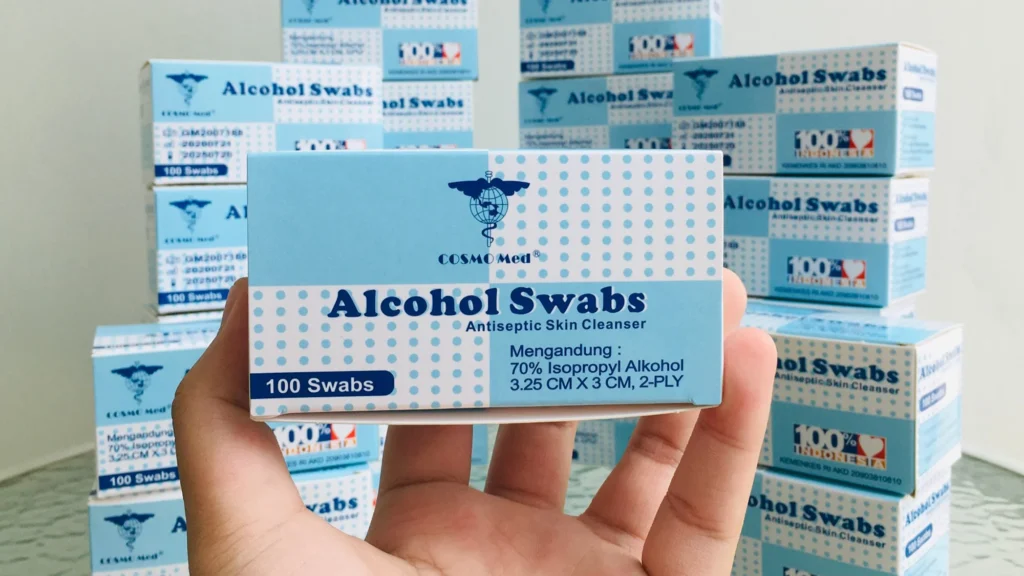
Is an alcohol swab and sanitizer the same?
No, they are not. An alcohol swab is used for specific skin cleaning before a medical procedure. Hand sanitizers may include thickeners such as aloe or glycerin. These are common in sanitizers used in institutions. You cannot use hand gel to prepare an injection site.
Are an alcohol swab and disinfectant wipes the same?
No, they are not the same thing. Disinfectant wipes are commonly used for hard surfaces such as countertops and floors. They may include harsh chemicals that are not safe for human skin, while an alcohol swab is rated for use on the human body.
What can I use instead of an alcohol swab?
If you do not have an alcohol swab, you can use soap and water. You should clean the area for at least twenty seconds. If you need to sterilize tools, you can use boiling water. However, for an injection, a sterile alcohol swab is always the best option.
Is an alcohol swab antibacterial?
Yes, it is very effective against most bacteria. The alcohol destroys the proteins and cell membranes of the bacteria. This kills the bacteria instantly. It is also effective against most viruses and some fungi.
Can I use an alcohol swab on a fungal infection?
No, you should not use it. This is because alcohol dries the skin, causing it to crack and hurt. The cracking may cause the fungal infection to worsen. You should use an antifungal cream instead.
Does an alcohol swab have an expiration date?
Yes, they do. The alcohol in the swab may evaporate even when it is in the foil package. If the swab is dry, it is not useful. You should check the expiration date of the swab before using it.